
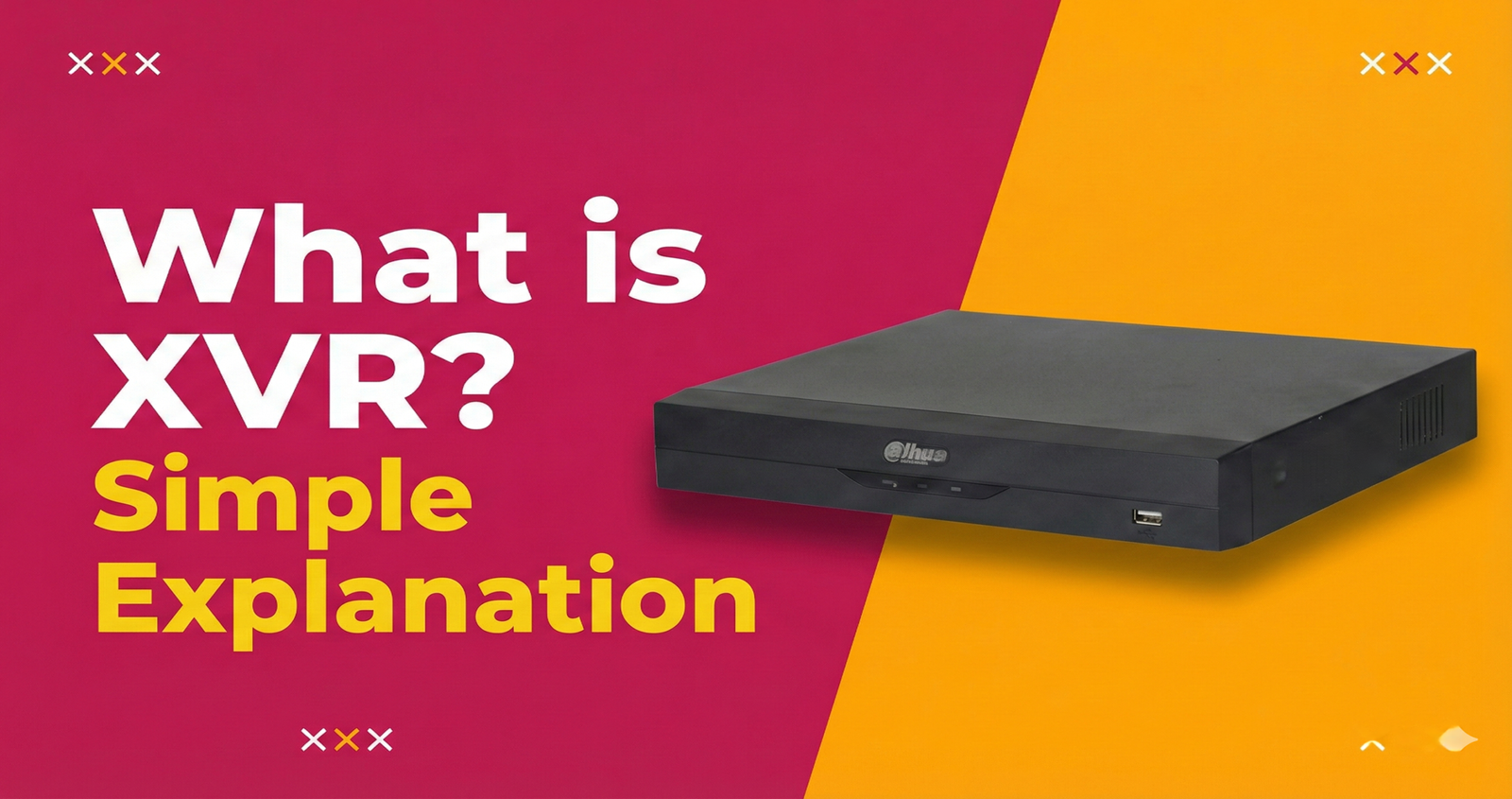
What is XVR? A Quick Guide
You’re shopping for a recorder. You see DVR. You see NVR. And now there’s XVRs.
What the heck is XVR Extended Video Recorder?
Don’t worry. It’s simpler than it sounds. This guide gives you quick, straight answers.
What Does XVR Stand For?
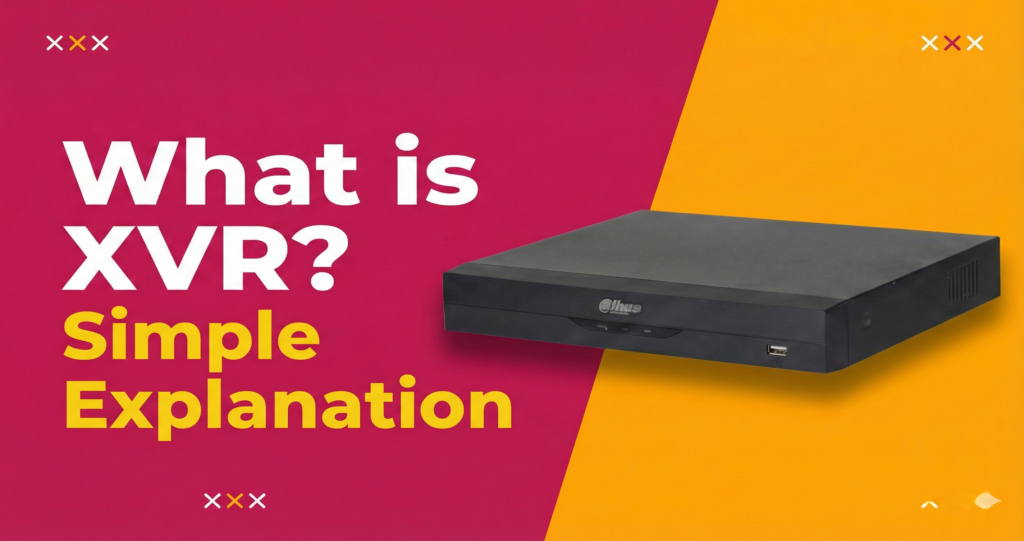
XVR stands for Extended Video Recorder.
The “X” means it’s flexible. It works with multiple camera types—not just one.
A digital video recorder (DVR) only works with analog cameras. A network video recorder (NVR) only works with IP cameras.
An Extended Video Recorder? It works with both. And more.
What is an XVR Recorder?
An Extended Video Recorder is a “do-it-all” device. It accepts video from different camera technologies:
- Analog cameras (old CCTV)
- HD-TVI cameras (Hikvision’s format)
- HD-CVI cameras (Dahua’s format)
- AHD cameras (another HD analog format)
- IP cameras (network cameras)
One box. Multiple camera types. That’s the Extended Video Recorder.
Dahua popularised this technology. Their XVR Series handles 5 different signal types. Hikvision makes similar recorders too.
XVR vs DVR — What’s Different?
Here’s the simple breakdown.
DVR (Digital Video Recorder)
- Works with analog cameras only
- Uses coax cables
- Converts analog signal to digital
- Limited to older camera technology
XVR (Extended Video Recorder)
- Works with analog AND digital cameras
- Supports multiple HD formats (TVI, CVI, AHD)
- Also accepts IP cameras
- More flexible for mixed systems
This XVR vs DVR comparison explains the technical differences in detail.
Bottom line: DVR is limited. Extended Video Recorder is flexible.
Browse DVR products to see what’s available.
XVR vs NVR — Which One to Choose?
This confuses most people. Let’s clear it up.
NVR (Network Video Recorder)
- Works with IP cameras only
- Cameras encode video themselves
- Runs on network (Ethernet/WiFi)
- Best picture quality
- More expensive setup
XVR (Extended Video Recorder)
- Works with analog, HD analog, AND IP cameras
- Recorder does the processing
- Supports mixed camera systems
- Good for upgrading gradually
- More affordable for existing setups
Read our detailed guide on What’s Better, DVR or NVR? for deeper comparison.
This NVR vs XVR guide also helps you decide.
When to choose Extended Video Recorder:
- You have old analog cameras but want to add new HD cameras
- You don’t want to replace your entire system
- You want flexibility for future upgrades
- Budget is tight
When to choose NVR:
- You’re starting fresh with all IP cameras
- You need the best possible picture quality
- You want PoE (one cable for power and video)
Browse NVR products if you’re going full IP.
Quick Comparison Table
| Feature | DVR | NVR | XVR |
| Analog cameras | ✅ | ❌ | ✅ |
| IP cameras | ❌ | ✅ | ✅ |
| HD-TVI/CVI/AHD | ❌ | ❌ | ✅ |
| Processing location | Recorder | Camera | Both |
| Best for | Old systems | New systems | Mixed systems |
| Flexibility | Low | Medium | High |
This DVR vs NVR vs XVR breakdown covers all three in more detail.
Who Makes XVR Extended Video Recorders?
The big names:
Dahua — They pioneered Extended Video Recorder technology. Their official website shows their full range. Check Dahua products available in Pakistan.
Hikvision — They call theirs “Turbo HD DVR” but it works the same way. See Hikvision products for options.
Uniview — Another solid brand. Their digital video recorders include Extended Video Recorder models.
Looking for an 8-channel option? Check the Turbo HD DVR 8 Channel — it supports multiple camera formats.
When Should You Buy an XVR?
Extended Video Recorder makes sense when:
You have existing analog cameras. Don’t throw them away. Extended Video Recorder lets you keep using them while adding new HD cameras.
You’re upgrading gradually. Can’t afford to replace everything at once? Extended Video Recorder lets you upgrade one camera at a time.
You have mixed camera brands. Different cameras use different formats. Extended Video Recorder handles them all.
You want future flexibility. Not sure what cameras you’ll buy next year? Extended Video Recorder keeps your options open.
CCTV XVR 8 Channel — Popular Choice
Most small businesses need 4 to 8 cameras. An 8-channel CCTV extended video recorder is the sweet spot.
It connects up to 8 cameras of any type — analog, HD-TVI, HD-CVI, AHD, or IP. Mix and match as needed.
Pair it with Turbo HD cameras for best results.
XVR Still Needs Monitoring
Here’s what most people miss.
Your Extended Video Recorder records everything. Great. But who watches?
You’re running a business. Dealing with customers. Managing staff. You can’t stare at screens all day. At night? You’re sleeping.
Recording doesn’t stop crime. It just gives you evidence after the fact. By then, the damage is done.
Real security means someone watching live.
At GCCTVMS, we don’t just sell recorders. We watch your cameras for you.
Our Security Operations Center (SOC) monitors 24/7. Real people. Real eyes. When something suspicious happens:
- Monitor — We watch your feeds live
- Verify — We confirm if it’s a real threat
- Alert — We notify you immediately
- Action — We coordinate response if needed
Check out our services to see how it works.
Want to discuss what’s right for your setup? Book a Free 30-minute Meeting with our team. No sales pressure. Just honest advice.
FAQ’s
What does XVR stand for?
Extended Video Recorder stands for Extended Video Recorder. It’s a recorder that works with multiple camera types — analog, HD-TVI, HD-CVI, AHD, and IP cameras.
What’s the difference between XVR and NVR?
NVR works with IP cameras only. Extended Video Recorder works with IP cameras plus analog and HD analog cameras. XVR is more flexible for mixed systems.
Can XVR work with old analog cameras?
Yes. That’s the main advantage. Extended Video Recorder supports old analog cameras alongside new HD and IP cameras. You don’t need to replace your entire system.
Which brands make Dahua XVR?
Dahua is the main brand that developed Extended Video Recorder technology. Hikvision makes similar products called “Turbo HD DVR.” Uniview also offers Extended Video Recorders.
Extended Video Recorder
If you’re starting fresh, NVR with IP cameras gives better quality. If you have existing cameras or want flexibility, Extended Video Recorder is the smarter choice.
What is XVR vs NVR?
XVR (Extended Video Recorder) works with multiple camera types—analog, HD-TVI, HD-CVI, AHD, and IP cameras. NVR (Network Video Recorder) works with IP cameras only. Extended Video Recorder is flexible for mixed systems. NVR gives better quality but requires all IP cameras.
Which is better DVR or XVR?
XVR is better. A DVR only works with old analog cameras. An Extended Video Recorder works with analog cameras PLUS HD cameras AND IP cameras. If you’re buying new, skip DVR and go straight to Extended Video Recorder. It costs slightly more but gives you way more flexibility.
What are the benefits of using an Extended Video Recorder?
Extended Video Recorder gives you flexibility. You can use old analog cameras with new HD cameras on the same recorder. You upgrade gradually without replacing everything. It supports 5 different camera formats. One device handles your entire mixed system.
Which is better 3K or 4K CCTV?
4K is better for picture quality — it has more pixels, so you see more detail. But 4K cameras cost more and need more storage space. 3K is a good middle ground — clearer than 1080p but cheaper than 4K. For most small shops, 3K is enough. For cash counters or entrances where you need to see faces clearly, 4K is worth it.
Can CCTV work without NVR?
Yes, but with limits. Some IP cameras have SD card slots and record directly. You can watch live footage without an NVR. But for proper recording, storage, playback, and managing multiple cameras — you need an NVR (or XVR/DVR depending on your camera type). Without a recorder, you lose most of the security benefits.