7 Reasons Virtual Doorman Pakistan Demand Is Rising Fast
Guard shifts get missed. Logbooks go unfilled. A visitor waved through without a proper check is how most break-ins in gated societies actually start. Virtual doorman Pakistan systems are catching on precisely because they close these gaps without needing more guards on payroll.
From DHA sectors to Bahria Town phases, housing societies are increasingly pairing their existing guard presence with remote verification technology. Here’s why this shift is picking up pace, and what’s actually driving it.
TL;DR
- Virtual doorman Pakistan adoption is rising as housing societies look for ways to verify visitors consistently, not just at whichever gate happens to be staffed.
- DHA and Bahria Town’s own security infrastructure, including command centers and CCTV networks, shows how large-scale societies already rely on centralised monitoring.
- A smart video intercom Pakistan setup gives residents a way to see and speak to visitors before granting access, cutting down on unchecked entries.
- Remote access control apartment Pakistan systems reduce reliance on physical keys and manual gate logs.
- Video intercom cost in Pakistan varies, but the ongoing savings on guard shifts often offset the upfront investment.
What Is a Virtual Doorman?
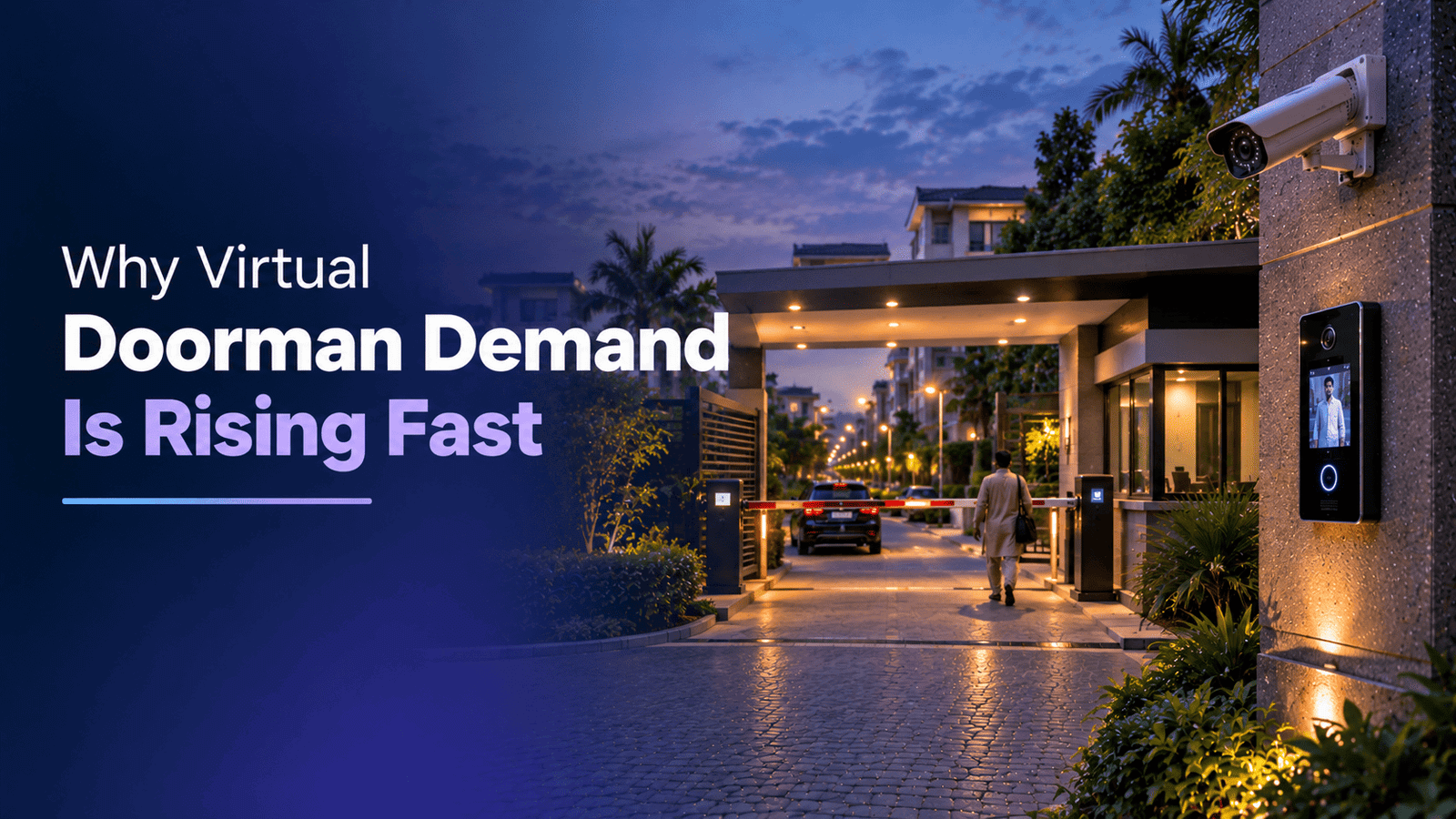
Direct answer: A virtual doorman is a remote system, usually a camera and intercom connected to a live operator, that verifies visitors and manages entry to a building or society without needing a guard physically stationed at every door.
Instead of a guard checking IDs in person, a virtual doorman setup lets a remote team see and speak to whoever’s at the gate, confirm who they’re visiting, and grant or deny access accordingly. For apartment buildings and gated sectors alike, this means every entrance gets consistent verification, not just the ones with a guard on duty.
7 Reasons Virtual Doorman Pakistan Demand Is Rising Fast
1. Guard Shifts Are Inconsistent, Especially at Night
A guard on a long shift can miss a visitor, step away, or simply not check properly by the early hours. Remote doorman services don’t get tired or distracted the same way, since a remote team monitors entry points continuously rather than relying on one person’s attention span.
2. Housing Societies Are Growing Faster Than Guard Headcount
DHA and Bahria Town developments keep adding new phases and sectors, but hiring enough qualified guards to cover every gate hasn’t kept pace. A remote concierge setup extends coverage to new entry points without needing to recruit and train an entirely new guard team for every expansion.
3. Manual Visitor Logs Are Easy to Falsify or Skip
A handwritten logbook depends entirely on the guard actually filling it in accurately. Pairing entry points with intercom monitoring creates a digital, time-stamped record automatically, removing the guesswork of whether a visitor was properly logged.
4. Residents Want to See Who’s at the Gate Before Approving Entry
Increasingly, residents don’t want to rely solely on a guard’s judgment call about who gets in. A smart video intercom Pakistan setup lets the resident themselves see and speak to a visitor through their phone, adding a layer of personal verification that a guard alone can’t provide.
5. Rising Guard Salaries Are Pushing Societies Toward Technology
Guard wages have climbed steadily, and societies covering dozens of entry points feel this cost directly. Remote guarding services let a smaller on-site team handle patrols and physical response, while a remote operator covers verification duties across multiple gates at once.
6. Apartment Buildings Need Consistent Coverage Guards Can’t Always Provide
A single guard covering a large apartment block’s lobby, back entrance, and parking area at once inevitably leaves gaps. An apartment doorman service backed by remote monitoring covers all these points simultaneously, rather than concentrating coverage wherever the guard happens to be standing.
7. Existing Security Infrastructure Already Points This Direction
Large societies like Bahria Town already run their own command centers and CCTV networks to monitor entry and exit points across their developments. Extending that same centralised model down to individual buildings and sectors, through live video monitoring services, is a natural next step rather than a completely new concept.
How Does a Virtual Doorman Work?
Direct answer: A virtual doorman works by connecting a building or gate’s camera and intercom to a remote team, who verify a visitor’s identity and purpose before granting entry, either by unlocking the gate remotely or alerting the resident directly.
The process typically starts when a visitor presses the intercom, which routes to a live operator rather than an unattended buzzer. The operator can see the visitor through the camera, ask who they’re there to see, and either grant access, deny it, or connect the visitor directly to the resident via two-way audio surveillance. Because a real person verifies each visitor, this cuts down significantly on the unchecked entries that come from an unmonitored buzzer system.
Is a Virtual Doorman Better Than a Security Guard?
Direct answer: For consistent, round-the-clock verification, a virtual doorman generally outperforms a single guard, though most housing societies get the best results from combining both rather than replacing guards entirely.
Guards remain valuable for physical presence, patrols, and responding to incidents on the ground. What they can’t do is watch every gate with equal attention at 3am after a long shift. Pairing them with an is CCTV monitoring worth it assessment for your specific society helps determine where remote verification adds the most value alongside your existing guard team.
How Much Does a Video Intercom Cost in Pakistan?
Direct answer: Video intercom cost in Pakistan depends on the number of entry points covered, whether monitoring is live or recording-only, and the scale of the housing society or building involved.
A single apartment building with one main entrance costs considerably less to equip than a multi-sector housing society with dozens of gates. The bigger factor in long-term value isn’t the hardware price alone, but whether the ongoing savings on guard shifts and reduced disputes over unverified visitors offset the setup cost over time.
Best Security System for Housing Societies in Pakistan
The best security system for housing societies in Pakistan isn’t necessarily the one with the most cameras or the largest guard roster. It’s the one where every gate gets consistent verification, whether through a guard, a remote operator, or both working together. Before committing to remote access control apartment Pakistan providers, ask how they handle high-traffic entry times and whether their system can scale as your society adds new sectors.
Summary
Virtual doorman Pakistan demand is rising because guard-only security has clear gaps, missed shifts, inconsistent logs, and coverage that thins out at busy or late hours, that residents are no longer willing to accept as unavoidable. Housing societies already running centralised command centers and CCTV networks are simply extending that same logic down to individual gates and buildings. For DHA and Bahria Town residents weighing their
Frequently Asked Questions
What does a virtual doorman actually do?
A virtual doorman verifies visitors remotely through camera and intercom, confirming who they’re visiting before granting entry, functioning much like a physical doorman but without needing someone stationed at the gate around the clock.
Is virtual doorman better than security guard for a housing society?
For consistent verification across multiple entry points, yes, though most societies benefit from combining virtual doorman coverage with a smaller physical guard presence rather than removing guards entirely.
How does a smart video intercom improve on a traditional buzzer?
A smart video intercom Pakistan setup lets residents or a remote operator see the visitor before granting access, rather than relying on an unattended buzzer that anyone can answer without verification.
What is the typical video intercom cost in Pakistan for an apartment building?
Costs vary with the number of entry points and whether monitoring includes live verification, but a single-entrance apartment setup typically costs less than a multi-gate housing society installation.
Can remote access control replace physical keys entirely?
Yes, in most cases. Remote access control apartment Pakistan systems typically use cards, codes, or app-based entry instead of physical keys, making it easier to revoke access instantly if needed.
Do DHA and Bahria Town already use centralised security monitoring?
Yes. Both rely on their own command centers, CCTV networks, and patrol teams to monitor entry points across their developments, which is part of why extending similar monitoring to individual buildings feels like a natural progression.
Is a virtual doorman system difficult to install in an existing building?
Not typically. Most systems integrate with existing intercom and gate infrastructure, meaning buildings don’t need a full security overhaul to add remote verification.
options, the question isn’t whether to replace guards altogether, but how to pair them with verification technology that covers every entry point consistently, day and night.